List of IGF 2008 Entrants

The Independent Games Festival has published their list of entrants for the 2008 competition. This is the 10th IGF.

Nevertheless, it seems to me that indie and experimental games have gained a lot of popular attention during the last 2-3 years.

Just 2 years ago I felt that indie games were perceived as “games with low production values”, but now it seems to be more accepted that they can provide something unique, a special sensibility.

Perhaps it relates to new distribution methods. Student project gets massive publicity, becomes PS3 downloadable (flow). Quirky indie game is sold on XBLA (Eets, Space Giraffe).

With casual games and downloadable console games, we have a distribution method and economical model for smaller games.

Service Restored

After my server had a complete hard drive failure Saturday, it looks like I now have all sites and blogs up and running again.

This marks the point in time after which I no longer find it interesting to administer my own Linux server.

The time I save will be spent playing games, I promise.

Echochrome

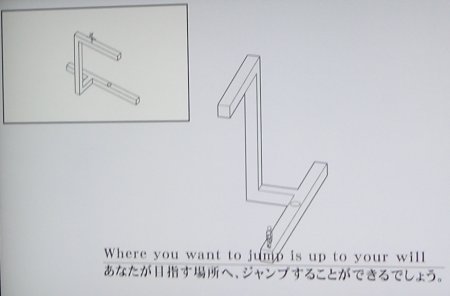
Echochrome was probably the game of Tokyo Game Show that I found the most compelling. If you haven’t read about it, it’s all about rotating the world in order to create Escher-like optical illusions which then actually work.

Echochrome

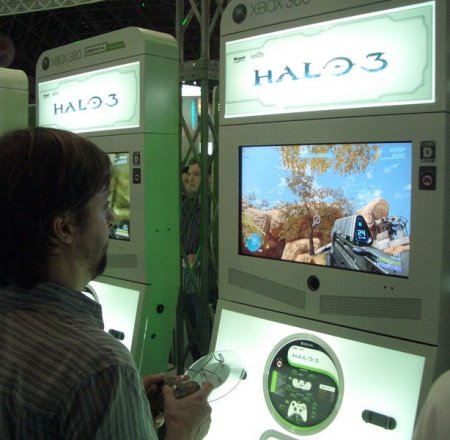
Hard to say why, but the 2d games of the show looked great on high-definition screens. Seriously. Echochrome and LocoRoco – not sure if they justify a PS3 and a 40 inch TV, but we are getting there.

Space Time Play: New Anthology on Games

Coming out this month, Space Time Play is a new anthology on video games edited by Friedrich von Borries, Steffen P. Walz and Matthias B?ttger.

My contributions are:

  • The essay “Variation over Time: The Transformation of Space in Single-screen Action Games” where I discuss the historical use of changing level layouts to create variation.
  • A (critical) review of Asteroids.
  • A review of Defender.

********************

The richly illustrated texts in “Space Time Play” cover a wide range of gamespaces: from milestone video and computer games to virtual metropolises to digitally-overlaid physical spaces. As a comprehensive and interdisciplinary compendium, “Space Time Play” explores the architectural history of computer games and the future of ludic space. More than 140 experts from game studies and the game industry, from architecture and urban planning, have contributed essays, game reviews and interviews. The games examined range from commercial products to artistic projects and from scientific experiments to spatial design and planning tools.

“Space Time Play” is not just meant for architects, designers and gamers, but for all those who take an interest in the culture of digital games and the spaces within and modeled after them. Let’s play!
_________________________________________________________

With contributions by Espen Aarseth, Ernest Adams, Richard A. Bartle, Ian Bogost, Iain Borden, Gerhard M. Buurman, Edward Castranova, Kees Christiaanse, James Der Derian, Stephen Graham, Ludger Hovestadt, Henry Jenkins, Jesper Juul, Frank Lantz, Bart Lootsma, Winy Maas, Lev Manovich, Jane McGonigal, Kas Oosterhuis, William J. Mitchell, Howard Rheingold, Katie Salen, Hans-Peter Schwarz, McKenzie Wark, Mark Wigley and many more.
_________________________________________________________

Space Time Play” will be available in bookstores as of October 2007
(USA November 2007). The following can be downloaded:

> Cover (JPEG, 150 dpi, 1.2 Mb)
> Table of Contents (PDF, 444 Kb)
> Introduction (PDF, 436 Kb)

Review copies can be requested from Birkh?user Publishing from Gisela Graf. Please direct questions about presentations and interviews as well as any other queries to the editors.
_________________________________________________________

Space Time Play
Edited by Friedrich von Borries, Steffen P. Walz and Matthias B?ttger
In cooperation with Drew Davidson, Heather Kelley, Julian K?cklich
496 pages, 352 color illustrations.