America,

America,
    Why is it is always too hot or too cold?

America,
    I’ve got one word for you: Thermostats

America,
    When we came to Brooklyn, the landlord said we should
    open the window if it got too warm

America,
    You know how this hurts my fragile northern soul

America,
    It is not exactly rocket science

America,
    The right temperature is patriotic too

America,
    I have a truckload of Danish radiator controls to sell you

America,
    Who cheers when you open that window?


(With apologies to Allen Ginsberg.)

Better Graphics, Diminishing Returns

Are game graphics at a point of diminishing returns?

In that case, what do we mean by “diminishing returns”?

  • Does it mean that an increase in the graphical budget of a game does not increase sales correspondingly?
  • Or does it mean that, subjectively, we are at a point where things look “good enough”?
  • Or are we talking negative returns? That increasing polygon count makes humans look worse due to the uncanny valley?

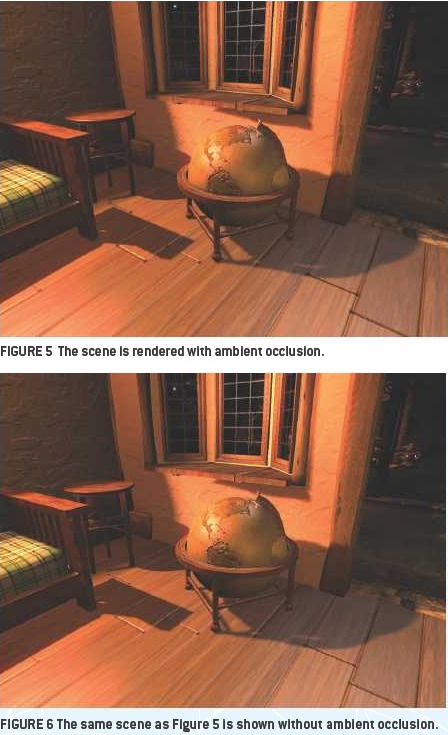
We could also look at a case study. Megan Fox and Stuart Compton have an article in the latest Game Developer Magazine about Ambient Occlusive Crease Shading.

(Disclaimer: I certainly respect the work done here, and I do not mean to pick on these authors. The stated goal is even of moving away from the “imitative” towards the “illustrative”, which I find good. And perhaps things will look different once they start moving.)

Nevertheless: How big a difference do you see between figure 5 with, and figure 6 without ambient occlusion? How much effort is it worth going from figure 6 to figure 5? Is this not diminishing returns?

Fox & Compton - Ambient Occlusive Crease Shading

(Illustration by Fox & Compton, from Game Developer Magazine, March 2008)

Gamers will literally be able to dive into the realistic world seen in large screen movies

I have been looking at the rhetoric surrounding console launches. This is, for real, from Sony’s 2005 press release announcing the Playstation 3:

Gamers will literally be able to dive into the realistic world seen in large screen movies and experience the excitement in real-time.

The same old drab way of selling a new console, of course, promising better graphics (joy!). But spot the really wonderful mistake of using literally as a modifier for emphasis: The selling point is not that games will feel more like movies, but that diving in is not a metaphor at all! You will literally be jumping headlong into your television set. Wow! Can’t wait!

PS. On the other hand, since we all so massively seem to agree that realistic 3d is not the way to go, I am beginning to hope that someone will actually stand up for 3d photo-realistic graphics. Any takers?

On the Game Studies Download 3.0 Shadow List

My article Swap Adjacent Gems to Make Sets of Three: A History of Matching Tile Games made it to the “shadow list” of this year’s Game Studies Download session at the Game Developers Conference.

I’ll quote the shadow list description of the paper:

Juul, Jesper. “Swap Adjacent Gems to Make Sets of Three: A History of Matching Tile Games.” Artifact journal, Volume 2, 2007. Also available at http://www.jesperjuul.net/text/swapadjacent/.

Games discussed: Tetris, Centipede, Puzzle Bobble, Zuma, Luxor, many others


Country: Denmark

The casual games marketplace puts conflicting pressures on game developers: Innovate enough to differentiate, but make the game sufficiently like other games that players find it easy to pick up and play. When player picks up a game, they are also using their conception of video game history to understand the new game.

The article presents a history of matching tiles games, including a complex family tree of influence and innovation. Categories in the family tree include timed vs. non-timed, methods of tile manipulation, and criteria for matching.

Innovation in casual games is incremental, and based on combinations of mechanics from existing games. This creates a somewhat schizophrenic environment of cutthroat competition between developers simultaneously trying to out-innovate and out-clone each other.

The basic development method has been analyzing existing games, identifying their basic components, and then creating prototypes that combined elements in new ways in order to create a moderately innovative matching tile game.

Takeaway: The key finding here for our audience is that the actual historical origins and influences of casual games developers are less important than the ones that the players come to the game with. The innovations that will be legible to these players depend strongly on their experience with specific previous games.

Xbox Live Arcade: The Democratization of Game Distribution, Peer Review, Community, all the Good Stuff

As speculated, Microsoft today announced at Game Developers Conference that they will open XNA and Xbox Live Arcade to developers.

It is called Xbox Live Community games and was described like this:

  • Developer makes and submits an XNA game using their “developer“´profile.
  • The game is “peer reviewed” by other developer to be screened for misuse of IP and “objectionable content”.
  • Game is made available to the public.

Details were spare on monetization, but the titles shown did say “limited trial” etc., so there seemed to an economic model in place.

Notice the good-guy rhetoric used: Community (obviously), the democratization of development and distribution, peer review (academia). As always, there may be some devil in the details.

The other interesting thing was that the games shown really did have an indie aesthetic – “low-fi” hand drawn graphics, offbeat themes. In other words, it seems that we do have an audience for games with an indie sensibility.

A few years ago I felt that half of the barrier for “indie games” was not distribution but the lack of an audience, and now it does looks like the “Youtube” phenomenon: Low production values, the feeling of something different, but a personal connection to the creator.

Indie has arrived, hasn’t it?