The History of the Commodore 64 in Twelve Objects #2: 10 PRINT “HELLO”

On the occasion of my upcoming book Too Much Fun: The Five Lives of the Commodore 64 Computer, I am writing The History of the Commodore 64 in Twelve Objects, posted weekly from November 1st, 2024:

Turning on the Commodore 64 launches us into a comforting interface in dark and light blue colors. It is a machine where interface, programming, and housekeeping take place using the same BASIC programming language. We can type immediate commands such as:

?10+20
30
READY.

BASIC (Beginner’s All-Purpose Symbolic Code), originally developed by John Kemeny and Thomas Kurtz at Dartmouth College in the early 1960s, was designed to make computing universally accessible, at first for Dartmouth students. BASIC became a central platform for games in the 1960s and 1970s, and David Ahl’s book BASIC Computer Games (1973) compiled and distributed the games made in computer labs on paper, the only viable form of mass-market program distribution of the time. One central early aspect of Commodore 64 culture was to type in pages and pages of programs from manuals, magazines, and books.

I think a core joy of programming is that we can make the computer do sustained work for us. The Commodore 64 User’s Guide coming with the machine encourages us to make a program printing “COMMODORE 64”, but the text was almost always the user’s name.

10 PRINT “HELLO!”:GOTO 10

Try making your own 10 PRINT program on the book’s website:

https://www.jesperjuul.net/c64/history/#obj2

Coming November 15th, Object #3: “We Promise You Won’t Use the Commodore 64 More than 24 Hours a Day” – Commodore 64 ads


PhD opportunity in practice-based research

At the Royal Danish Academy, we are inviting applications for prequalification for an upcoming fellowship opportunity: the Novo Nordisk Foundation’s 2025 Mads Øvlisen PhD fellowships in art history and practice-based research.

There is definitely a possibility of a game-related Phd project, for example one that combines game-making and research, or a curatorial one.
This is a two-step process where applicants first need to send a short project outline, and if approved it gets developed into a full application in collaboration with us.
Follow the link for more info or email me.

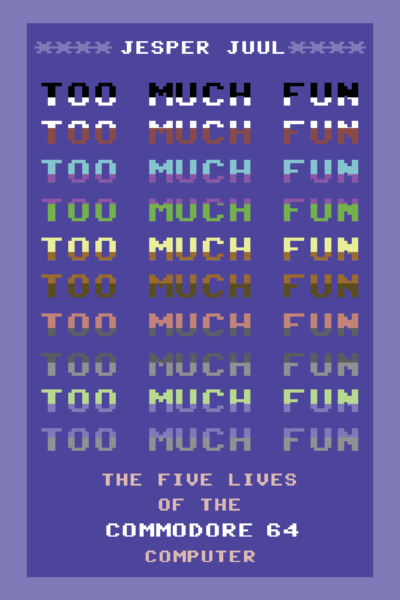
My upcoming book, Too Much Fun: The Five Lives of the Commodore 64 Computer

I am happy to announce that I have finished the page proofs for my new book, Too Much Fun: The Five Lives of the Commodore 64 Computer. Coming on December 10th, 2024. Feel free to preorder!

I will post more as we get closer to the publication date.

https://mitpress.mit.edu/9780262549516/too-much-fun/

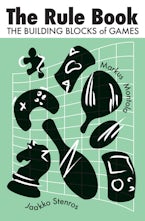
The Rule Book: The Building Blocks of Games

The Rule BookPresenting The Rule Book: The Building Blocks of Games by Jaakko Stenros and Markus Montola. Out now on MIT Press in the Playful Thinking series.

How games are built on the foundations of rules, and how rules—of which there are only five kinds—really work.

Board games to sports, digital games to party games, gambling to role-playing games. They all share one thing in common: rules. Indeed, rules are the one and only thing game scholars agree is central to games. But what, in fact, are rules? In The Rule Book, Jaakko Stenros and Markus Montola explore how different kinds of rules work as building blocks of games. Rules are constraints placed on us while we play, carving a limited possibility space for us. They also inject meaning into our play: without rules there is no queen in chess, no ball in Pong, and no hole in one in golf.

Stenros and Montola discuss how rules constitute games through five foundational types: the explicit statements listed in the official rules, the private limitations and goals players place on themselves, the social and cultural norms that guide gameplay, the external regulation the surrounding society places on playing, and the material embodiments of rules. Depending on the game, rules can be formal, internal, social, external, or material.

By considering the similarities and differences of wildly different games and rules within a shared theoretical framework, The Rule Book renders all games more legible.


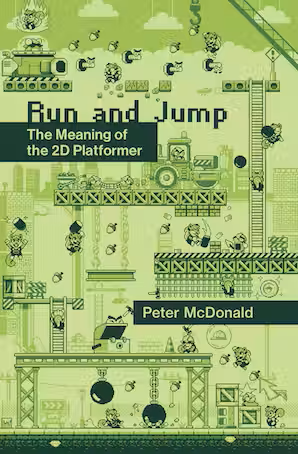
Peter D. McDonald: Run and Jump, The Meaning of the 2D Platformer

Run and Jump cover

Out now in the Playful Thinking series: Peter D. McDonald: Run and Jump, The Meaning of the 2D Platformers.

We are proud to present Peter D. McDonald’s new book.

“How abstract design decisions in 2D platform games create rich worlds of meaning for players.

Since the 1980s, 2D platform games have captivated their audiences. Whether the player scrambles up the ladders in Donkey Kong or leaps atop an impossibly tall pipe in Super Mario Bros., this deceptively simple visual language has persisted in our cultural imagination of video games. In Run and Jump, Peter McDonald surveys the legacy of 2D platform games and examines how abstract and formal design choices have kept players playing. McDonald argues that there is a rich layer of meaning underneath, say, the quality of an avatar’s movement, the pacing and rhythm of level design, the personalities expressed by different enemies, and the emotion elicited by collecting a coin.

To understand these games, McDonald draws on technical discussions by game designers as well as theoretical work about the nature of signs from structuralist semiotics. Interspersed throughout are design exercises that show how critical interpretation can become a tool for game designers to communicate with their players. With examples drawn from over forty years of game history, and from games made by artists, hobbyists, iconic designers, and industry studios, Run and Jump presents a comprehensive—and engaging—vision of this slice of game history.”