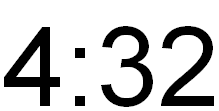
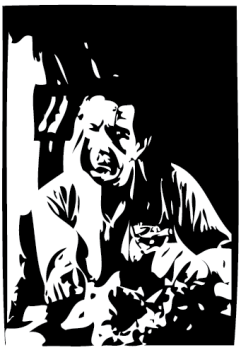
John Cage's silent music piece 4:33 is often interpreted as doing two things: 1) It draws attention to the sounds that are all around us, even in a concert hall or in rooms we think of as silent. The music that we tend not to hear, if you will. 2) In a 1948 lecture, Cage had argued that duration was the most fundamental characteristic of music. Hence 4:33 can be seen as a minimal composition, containing only the duration that makes music. What is the 4:33 of games? Is there a game all around us that we never see? Is there a fundamental characteristic of games? In this conceptual game piece, I argue that there often is a silent game that we do not notice - especially in computer games. Furthermore, the fundamental processual characteristic of games is not duration, but rather a change of state; the outcome going from undecided to decided. 4:32 is an exploration of these issues. |
 |